Jan 9 (Reuters) - The U.S. Environmental Protection Agency will reassess the safety of herbicide paraquat, its administrator Lee Zeldin said on Friday on X, adding that the body is requiring manufacturers to thoroughly prove that current uses are safe in real-world conditions.
Syngenta, which markets paraquat under the brand name Gramoxone, is among the herbicide's major sellers.
The Swiss-based agricultural chemical company is facing several lawsuits in the U.S., where plaintiffs allege exposure to paraquat caused them to develop Parkinson's, a degenerative brain disease that leads to loss of muscle coordination.
It has previously said there was "no credible evidence" that paraquat causes Parkinson's.
In agricultural settings, paraquat is mostly applied to soybean, corn and cotton crop fields to control invasive weeds and grasses, according to the Environmental Protection Agency.
(Reporting by Costas Pitas and Pooja Menon; Editing by Alan Barona)
latest_posts
- 1
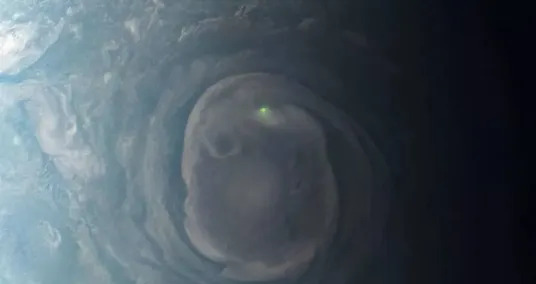
 Lightning on Jupiter could be up to 1 million times stronger than on Earth
 - 2Australia Cracks Down on Gambling Ads as Prediction Markets Like Polymarket Remain Blocked
- 3Iconic iceberg turns blue, on verge of totally disintegrating, NASA says
- 4How Mars' ancient lakes grew shields of ice to stay warm as the Red Planet froze
- 5Uzbekistan launches €9.46 billion green energy push, covering nation’s power needs


- World’s tallest bridge and biggest museum named ‘greatest places of 2026’
- 6 Famous Urban communities for Shopping on the planet
- Israel and Lebanon's Hezbollah continue to trade attacks
- EU delays signing of Mercosur free trade deal
- Massive supernova explosion may have created a binary black hole
- Physicists and philosophers have long struggled to understand the nature of time: Here's why
- Jillian Michaels put me at the center of a body positivity debate. She's not entirely wrong about obesity.
- Step by step instructions to Involve Compact disc Rates for Magnanimous Giving
- 4 well known subjects in school