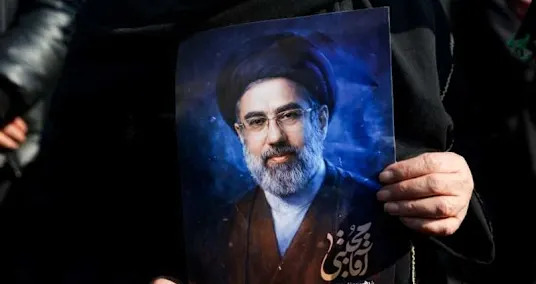
A diplomatic memo cited by The Times says Iran’s supreme leader is in severe condition and unable to take part in decision-making, deepening uncertainty over who is running the country.
Iran’s Supreme Leader, Mojtaba Khamenei, is incapacitated and receiving medical treatment in the Shi'ite holy city of Qom, according to The Times on Tuesday, citing a diplomatic memo said to be based on American and Israeli intelligence.
The memo allegedly states that Khamenei is unconscious and in severe condition, rendering him unable to participate in regime decision-making, though the claims have not been independently verified.
According to the report, the memo was shared with Gulf allies and appears to be the first document that reports Khamenei's location, which had not previously been made public.
The reported condition of Mojtaba Khamenei, who succeeded his father after Ali Khamenei’s death in Israeli and US strikes on February 28, is likely to deepen uncertainty over who is effectively running Iran during the war. Although Iranian officials have insisted that he remains in charge, his absence from public view since the conflict began has fueled speculation that power may rest elsewhere within the regime.
Khamenei has reportedly been incapable of running the Islamic regime for several weeks. Any prolonged inability to govern would likely intensify questions about whether the Islamic Revolutionary Guard Corps now holds de facto control.

The report also said that two statements attributed to Khamenei have been broadcast on Iranian state television since the war began, but no audio or video of him speaking directly has been released. That absence has added to unverified claims from opposition-linked sources that he remains in critical condition.
The same memo, according to The Times, said preparations were underway in Qom for a large mausoleum for Ali Khamenei and possibly other family members. If correct, that would differ from earlier Iranian reports on Ali Khamenei’s burial plans, while mourning ceremonies were expected in Tehran.
Delay in Ali Khamenei's ceremony pokes holes in Iran's illusion of controlled governance
The delay in a state funeral has also raised questions. Iranian authorities previously said the ceremony was postponed because of expectations of an exceptionally large turnout, but the continued uncertainty has drawn scrutiny because Shi’ite custom traditionally favors burial soon after death.
Qom has already played a central role in the post-Khamenei succession story. In early March, Israeli strikes in Qom hit the building where the 88-member Assembly of Experts was reportedly meeting to choose a successor to Ali Khamenei, underscoring the city’s central role in both the clerical succession process and the regime’s power structure.
latest_posts
- 1
 RFK Jr. guts the US childhood vaccine schedule despite its decades-long safety record
 - 2Between 600 to 800 aid trucks entering Gaza daily since start of ceasefire, COGAT confirms
- 3Southern Californians, your health insurance costs could rise in 2026
- 4Vote In favor of Your Favored Shimmering Water
- 5The most effective method to Stay away from Normal Traps While Recruiting a Material Organization


- Exclusive-Drugmakers raise US prices on 350 medicines despite pressure from Trump
- Lahav 433 head Asst.-Ch. Meni Benjamin named as police officer investigated for breach of trust
- Scientists detect X-ray glow from interstellar comet 3I/ATLAS extending 250,000 miles into space
- Flying without a Real ID? That'll soon cost you $45, TSA says.
- Vote in favor of Your Number one Smartwatch: Exactness and Style Matter
- New Jordan security fence could be done in early 2028
- Dominating Capable Mastercard Utilization: Key Contemplations
- Iran's stolen futures: The arrested Iranians at risk of execution by the regime
- What to watch for in weight loss drugs in 2026